

What Is Real Time Decision Making and Why Is It So Difficult?
Real time decision making goes far beyond simply monitoring the current state of a system. A truly intelligent system interprets what is happening, evaluates possible outcomes, and recommends the most appropriate action without delay.
Many digital platforms generate data in seconds or even milliseconds. However, producing data does not automatically produce decisions.
When data lacks context, remains disconnected from historical behavior, or fails to test alternative outcomes, it delivers information not intelligence.
This is exactly where digital twin technology comes into play.
Why Are Digital Twins Different from Traditional Systems?
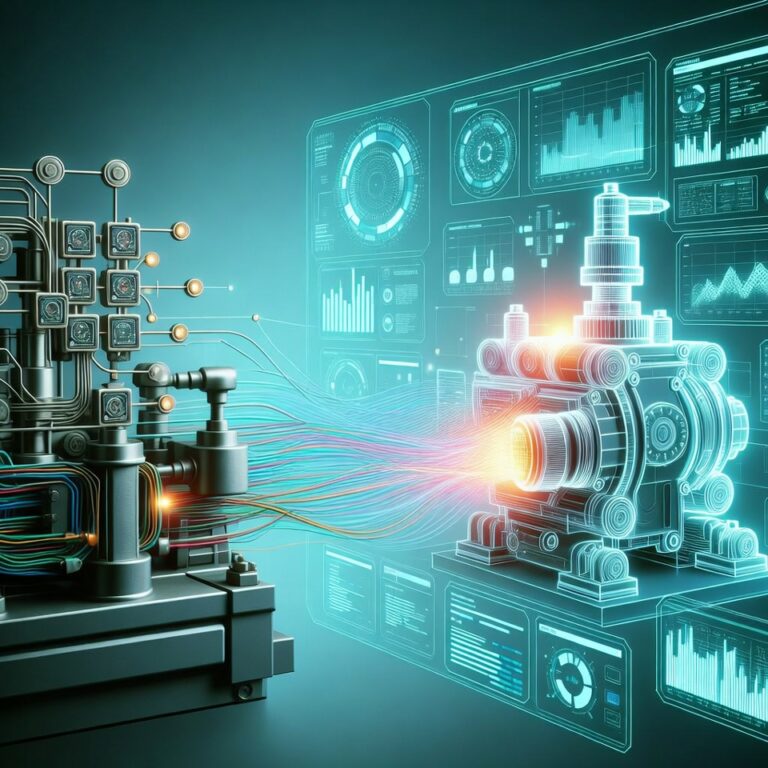
A digital twin represents a physical asset or process as a dynamic, behavior driven, and continuously evolving system.
While traditional monitoring or reporting tools remain static, a digital twin actively adapts to changing conditions.
With this approach, the system:
- Uses real time data as a continuous input
- Interprets conditions through behavioral models
- Actively tests possible future scenarios
As a result, organizations move beyond asking “What is happening?” and begin answering
“What is the best decision to make right now?”
Core Layers of a Real Time Decision Mechanism
1. Data Layer: Representing the Current State
This layer includes data from sensors, IoT devices, operational platforms, and environmental systems.
Here, speed matters but continuity and reliability matter more.
Data alone does not create decisions. It provides the raw material for intelligent reasoning.
2. Model Layer: Understanding System Behavior
The model layer defines not only what the system looks like, but how it behaves.
These behaviors rely on physical rules, operational constraints, and cause and effect relationships.
Through this structure, the system compares live data with historical patterns and directly identifies meaningful deviations.
3. Intelligence Layer: Turning Insight into Action
Decision making takes shape within the intelligence layer.
This layer detects anomalies, predicts trends, and evaluates multiple scenarios simultaneously.
Based on these analyses, the system clearly identifies the lowest risk and most efficient decision path.
Rather than relying on a single metric, decisions emerge from context aware, multi dimensional evaluation.
Why Scenario Based Thinking Matters
Every real world decision carries cost and risk.
A digital twin allows organizations to test these risks in a virtual environment before acting.
Based on the current situation, the system:
- Generates alternative actions
- Simulates the outcomes of each option
- Compares decision paths side by side
This approach eliminates trial and error in the real world and enables confident, informed decision making.
How Digital Twins Expand Decision Support Systems
Traditional decision support tools typically focus on historical data.
Digital twins, by contrast, combine the present state with future possibilities.
This expanded perspective allows organizations to:
- Base decisions on system behavior rather than intuition
- Standardize operational responses
- Scale decision making processes efficiently
The TwinUp Perspective: Digital Twins That Produce Decisions
At TwinUp, we do not position digital twins as passive monitoring layers.
We design them as active decision mechanisms.
The platform evaluates operational goals, real time conditions, and model driven behaviors together.
This approach transforms the digital twin from a supportive tool into the core engine where decisions are generated.
Conclusion: Meaning Matters More Than Speed
Real time decision making does not depend on faster data alone.
It depends on systems that build the right context.
By bringing data, models, and intelligence together, digital twin technology creates that context.
As a result, organizations make decisions that are more consistent, predictive, and sustainable.