
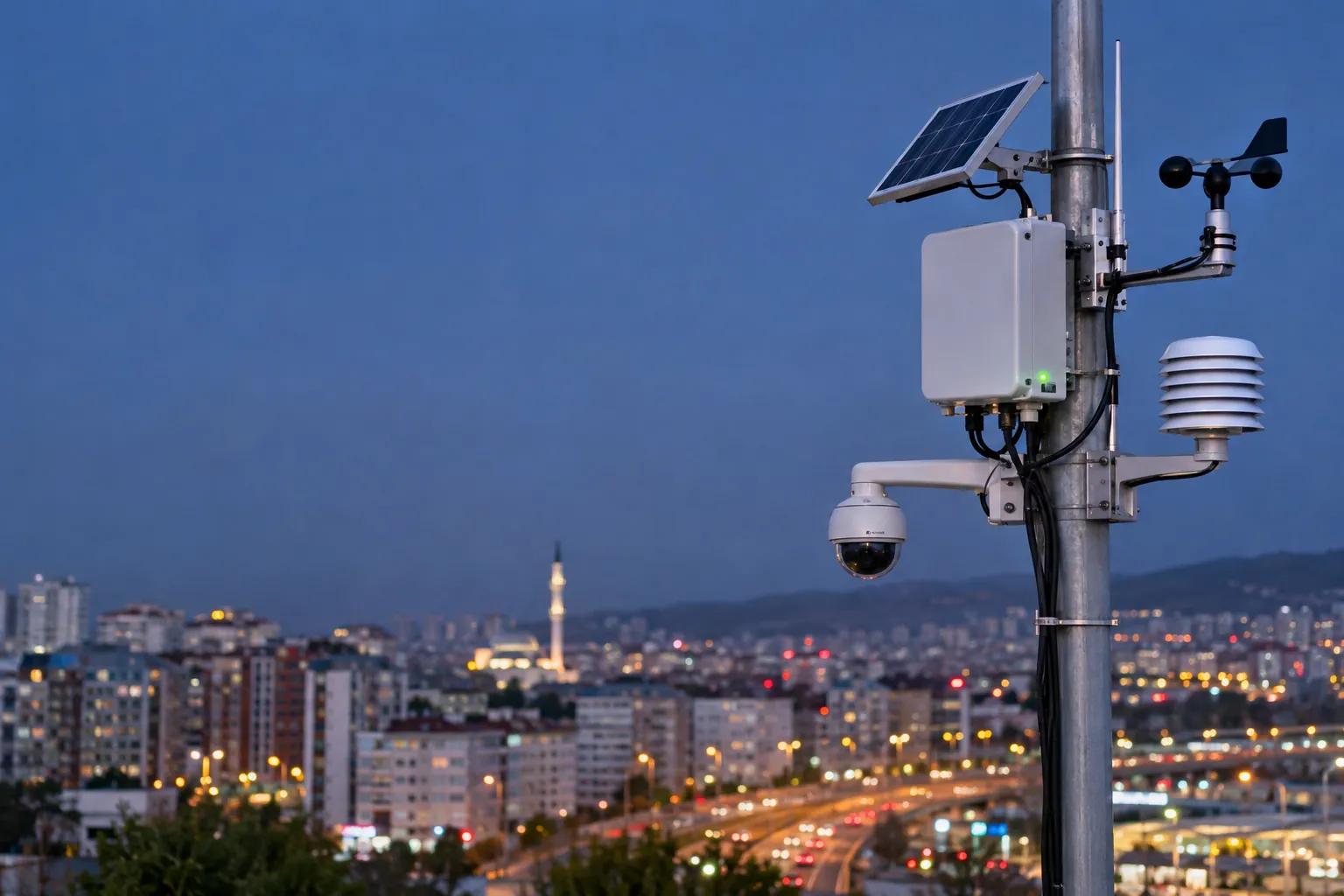

Smart city sensors: one team from choice to upkeep.
We choose the sensors that measure air quality, traffic, water levels or how full bins are, install them in the field, bring their data onto one screen and keep them working for years.
Sensors are small devices that measure what is happening in the city as it happens: an air-quality station on a pole, a water-level gauge under a bridge, a fill-level sensor inside a waste bin. Choosing the right device, installing it in the right place and keeping its data flowing each take their own expertise. We take on the whole job as one team. Because we are not tied to any brand, whichever device you choose, its data appears in the Twinup digital twin and in your own systems.
Flood warnings
When a stream starts to rise, crews are alerted and can act before it overflows.
Tracking clean air
You see on the map, hour by hour, which neighbourhood has rising pollution or noise.
Smarter waste collection
Trucks go only to bins that are full, so there are fewer wasted trips and fewer overflowing bins.
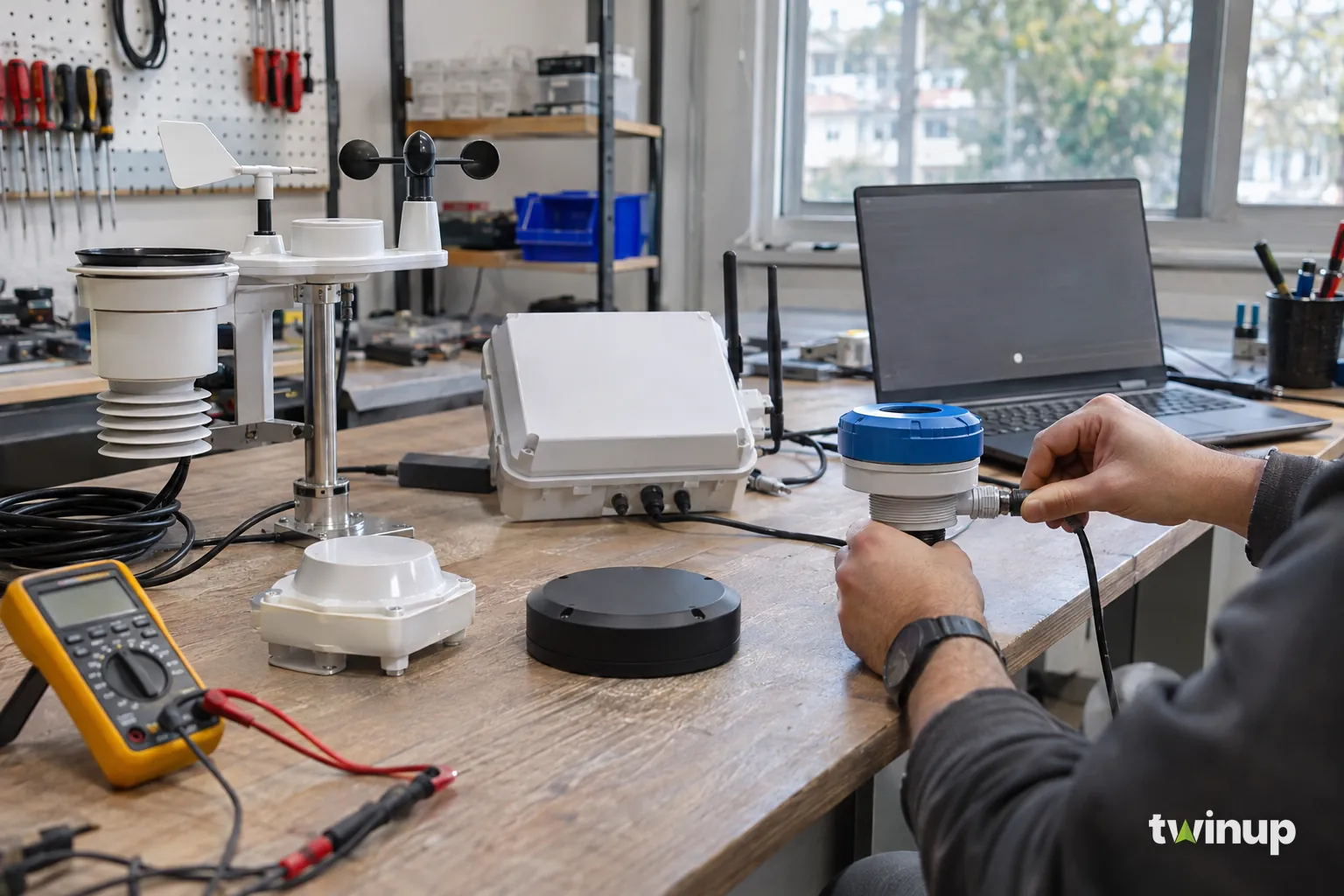
Choosing the right sensor
We start with your question, not a catalogue: what do you want to measure, where and how often? Then we choose devices that suit the site, the need and the budget.
- Needs analysisTogether we define what to measure, how precise it must be, and how the device will be powered and connected.
- Brand-independent choiceWe are not tied to any brand; we compare devices on accuracy, certification, durability and long-term cost.
- Trial and acceptance testingBefore buying in bulk, we try devices in the field and test that they meet expectations.
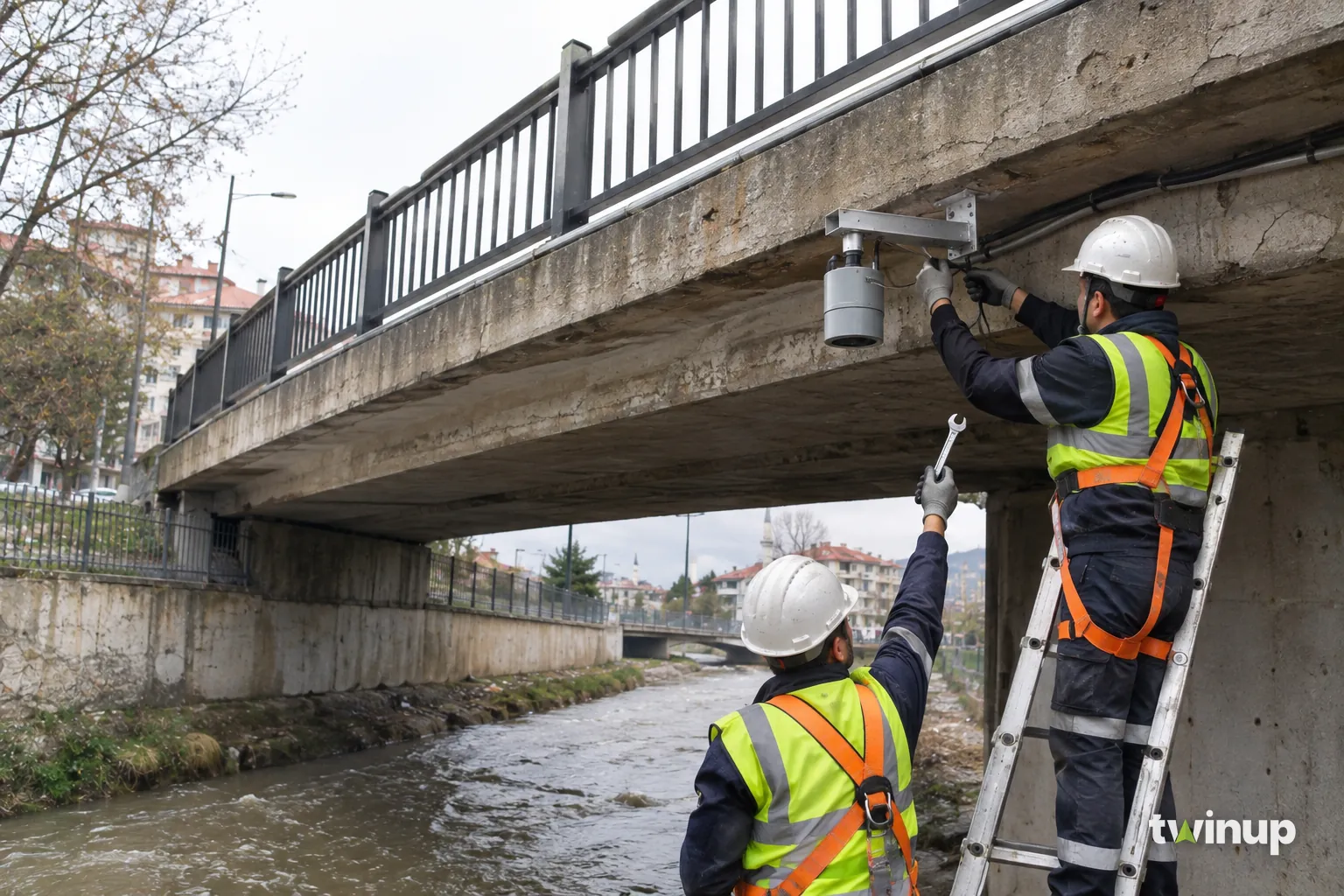
Installing in the field
Poles, building façades, manholes, bridges or pipelines: our teams mount every device in the right spot and give it power and an internet connection.
- Site survey and mounting planFor every point we decide how the device will be fixed and obtain the permits needed.
- Mounting and powerWe connect the device to mains power, a battery or a solar panel.
- ConnectivityWe set up LoRaWAN, NB-IoT, 4G/5G or fibre links so the data reaches the centre.
- CommissioningWe register every device with its location and check that its first readings are correct.
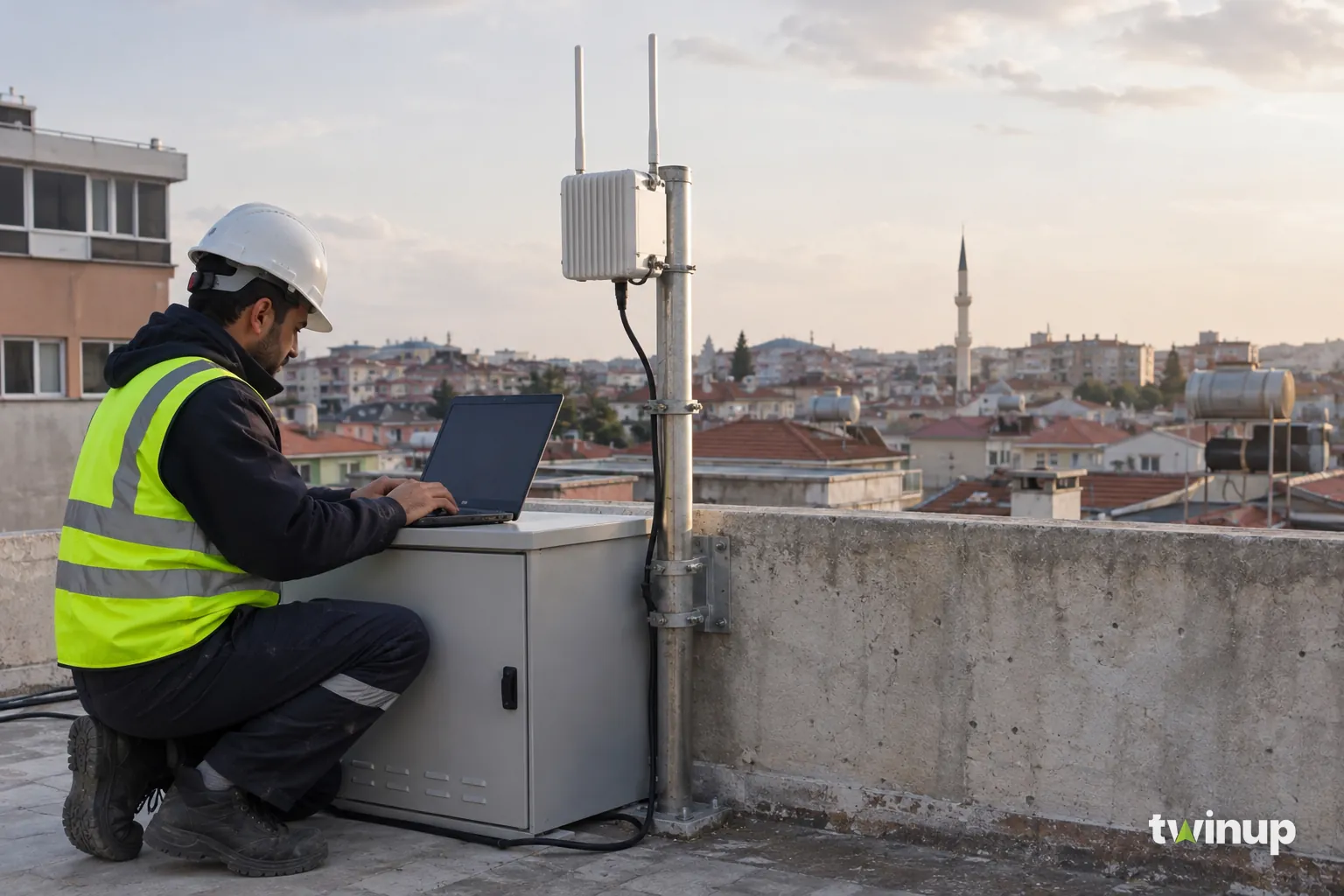
Bringing the data onto one screen
Devices from different brands speak different languages. We translate all their data into one common format and pass it to the digital twin and the systems you already use.
- Data collectionWe collect data over every method the devices use (MQTT, Modbus, OPC UA, manufacturer APIs).
- One data modelSame units and format whatever the brand, so readings can be compared side by side.
- Feeding your existing systemsBesides Twinup, we send data to SCADA, GIS and the other software you use.
- Alarm rulesWhen a reading crosses a limit you set, the right team gets a notification and a work order.
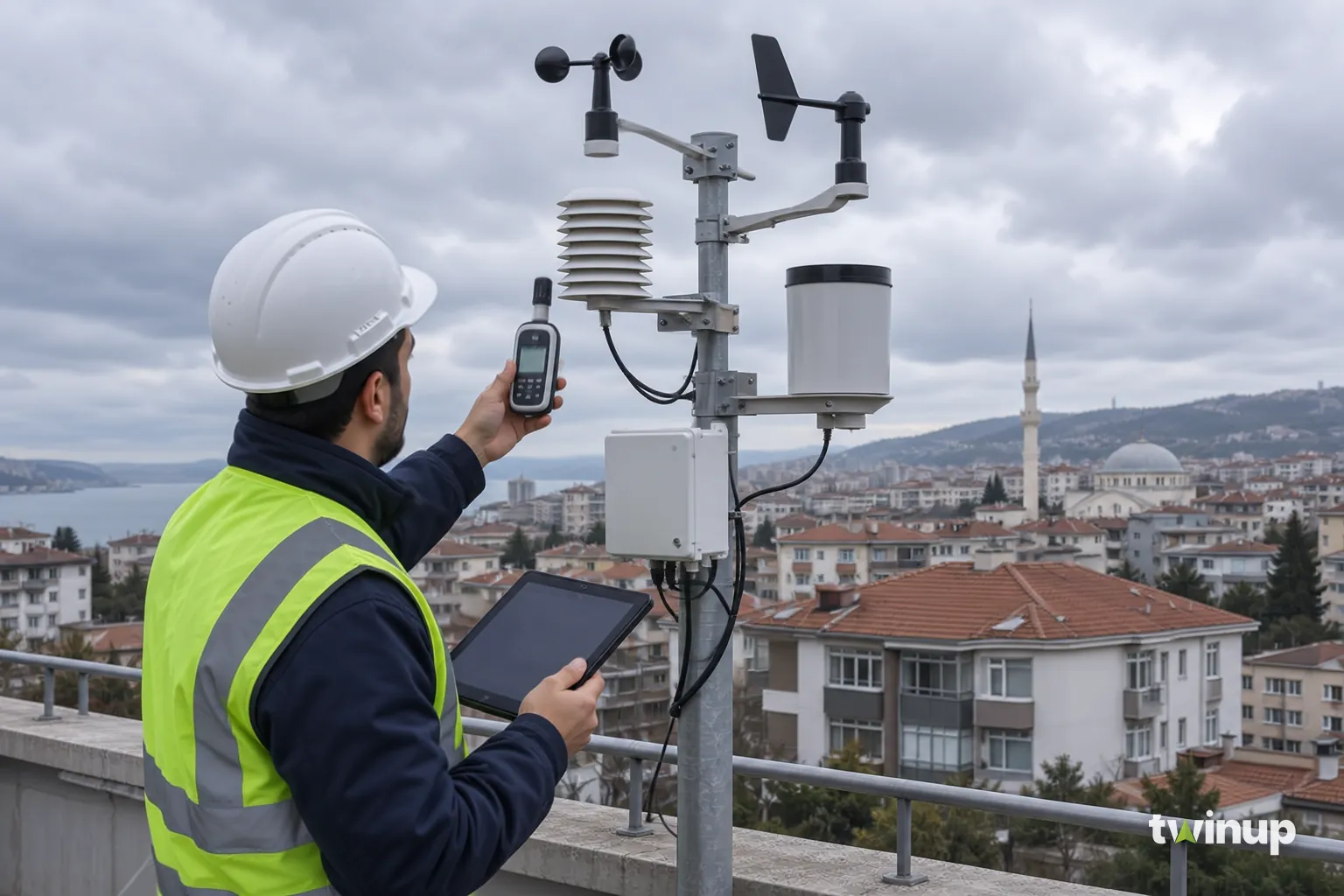
Keeping it running for years
A sensor that goes quiet or measures wrongly is worse than none: it leads to wrong decisions. With regular maintenance and remote monitoring, we keep the network measuring correctly.
- Regular maintenanceWe clean devices at set intervals and check their batteries and connections.
- CalibrationWe compare readings with reference instruments and correct any drift.
- Remote monitoringDevices that stop sending data, run low on battery or give inconsistent readings are spotted automatically.
- Repairs and spare partsWe replace faulty devices and manage the stock of spare parts.
Air quality and environment
Measures air pollutants and noise, neighbourhood by neighbourhood.
Weather
Tracks temperature, wind and rain live at points across the city.
Traffic and mobility
Shows how busy roads, pavements and cycle lanes are, and where parking is free.
Water and wastewater
Monitors pressure, flow and water quality in the network and catches leaks early.
Energy and lighting
Controls street lights remotely and tracks energy use.
Waste
Reports how full bins are and warns of fire risk.
Structural health
Watches vibration, tilt, cracks and displacement in bridges, tunnels, dams and buildings.
Disaster and early warning
Gives early notice of signs of floods, earthquakes, landslides and fires.
Safety and public spaces
Detects gas leaks, covers opened without permission and how crowded places are.
Every sensor we install appears in the twin.
The Twinup digital twin is a 3D copy of the city on screen. Every device we install sits at its real location in that model, with its live readings, alarms and maintenance status on one screen alongside the map.
Explore the IoT platform →- LoRaWAN
- NB-IoT
- LTE-M
- 4G / 5G
- MQTT
- HTTP / REST
- Modbus
- OPC UA
Get Started
Bring this to your operation.
Tell us about your infrastructure and our engineers will map this solution to your needs.